If you’ve ever opened your phone in November and seen endless advertisements announcing unbelievable discounts, limited-time offers, and massive holiday sales, you’ve probably encountered Black Friday.
But what is Black Friday, exactly? Why does it happen after Thanksgiving? And how did an ordinary Friday become one of the most recognizable shopping events in the United States?
Black Friday is more than a day of discounted televisions, smartphones, clothing, and Christmas gifts. It’s an American shopping tradition with an interesting history, distinctive expressions, and an enormous influence on modern retail.
For some people, Black Friday means waking up early to find a bargain. For others, it’s an opportunity to shop online, purchase holiday gifts, or simply enjoy the excitement of the season.
In this guide, we’ll explain the meaning of Black Friday, when it takes place in 2026, how the tradition developed, what happens during the event, and how shoppers can make smart purchasing decisions.
Whether you’re hearing the phrase for the first time or want to understand this American tradition better, here’s everything you need to know.
What Is Black Friday? Simple Meaning and Definition
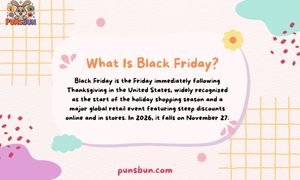
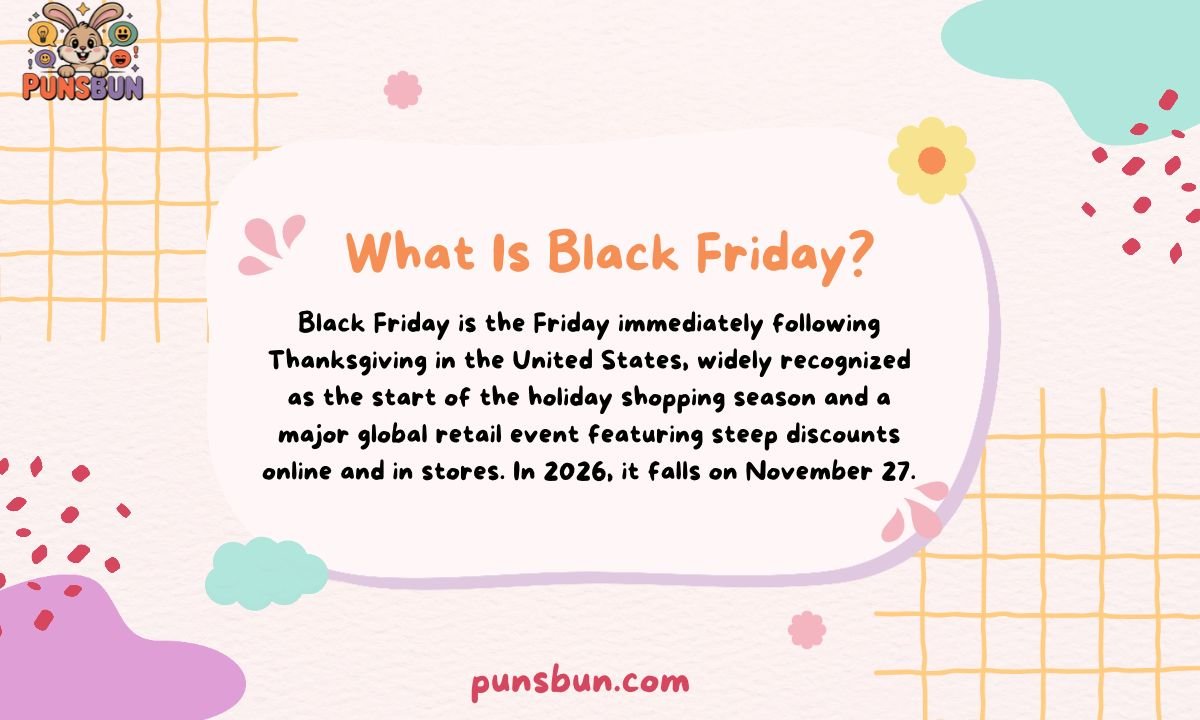
Black Friday is the Friday immediately after Thanksgiving Day in the United States, widely known for major retail sales, special discounts, and holiday shopping promotions.
It traditionally marks the beginning of the busy Christmas shopping season.
During Black Friday, retailers often promote discounted products across popular categories such as electronics, clothing, toys, furniture, appliances, and beauty products.
Both physical stores and online shopping websites participate in the event.
Black Friday is especially important in American shopping culture because it connects Thanksgiving celebrations with the beginning of the Christmas holiday season.
For many families, Thanksgiving is a time to gather, share meals, and express gratitude. The following day often shifts attention toward holiday preparations and gift shopping.
However, Black Friday is not a federal holiday in the United States. It is primarily a commercial event, even though the day after Thanksgiving is a day off for some workers and students.
What Does Black Friday Mean in Simple Words?
In simple words, Black Friday means a major shopping day when stores advertise special sales and lower prices.
For example, imagine that you’ve been planning to purchase a new laptop.
The laptop normally sells for $800, but a store advertises it for $600 during a Black Friday promotion.
The store is offering a $200 discount, equivalent to 25% off the regular price.
That kind of promotion helps explain why millions of Americans pay attention to Black Friday.
Of course, not every advertised deal represents genuine savings. Smart shoppers compare prices, check product quality, and decide whether a purchase fits their budget.
Black Friday Meaning in a Sentence
Here are a few examples of how Americans commonly use the expression:
- “I’m waiting until Black Friday to buy a new television.”
- “Our favorite clothing store has a Black Friday sale.”
- “We found some great Black Friday deals on Christmas presents.”
- “Are you shopping in stores or online this Black Friday?”
- “I’m making a shopping list before the Black Friday discounts begin.”
In everyday conversation, people use the phrase to describe both the actual Friday after Thanksgiving and the wider period of holiday shopping promotions.
When Is Black Friday in 2026?
Black Friday 2026 falls on Friday, November 27, 2026.
It takes place one day after Thanksgiving, which is Thursday, November 26, 2026.
The date changes every year because Thanksgiving is observed on the fourth Thursday of November.
Black Friday always follows immediately afterward.
Here are the important shopping dates for 2026:
| Event | Date |
|---|---|
| Thanksgiving Day | Thursday, November 26, 2026 |
| Black Friday | Friday, November 27, 2026 |
| Small Business Saturday | Saturday, November 28, 2026 |
| Cyber Monday | Monday, November 30, 2026 |
Although these dates are connected, each event has a slightly different purpose.
Thanksgiving centers on gratitude and togetherness.
Black Friday focuses on retail promotions and seasonal shopping.
Small Business Saturday encourages consumers to support independent businesses.
Cyber Monday is especially associated with online shopping deals.
Does Black Friday Always Fall in November?
Yes. In the United States, Black Friday always occurs in November.
Because Thanksgiving falls on the fourth Thursday of the month, Black Friday takes place between November 23 and November 29.
Its position on the calendar changes, but its relationship to Thanksgiving stays the same.
That makes the holiday calendar useful for anyone planning seasonal purchases or searching for Black Friday information.
How Long Does Black Friday Last?
Traditionally, Black Friday lasted one day.
However, modern retailers frequently extend their promotions beyond Friday itself.
You might see advertisements for:
- Early Black Friday sales
- Black Friday week
- Black Friday weekend
- Extended holiday deals
- Cyber Week promotions
Some stores begin advertising seasonal offers earlier in November.
Others continue selected promotions into December.
The exact timing depends on the retailer, product category, and individual promotion.
Always check the beginning and ending dates of a specific sale rather than assuming every discount remains available throughout the shopping season.
Why Is Black Friday Important in America?
Black Friday has become a major part of American holiday shopping culture.
Its importance comes from a combination of tradition, consumer behavior, business marketing, and the popularity of gift giving.
Many Americans spend the weeks before Christmas purchasing presents for family members, friends, coworkers, and loved ones.
Black Friday provides an opportunity to shop for those gifts while looking for advertised savings.
The event also gives retailers an opportunity to attract customers, introduce seasonal promotions, and compete for holiday purchases.
The Connection Between Thanksgiving and Christmas
Thanksgiving is celebrated in late November, while Christmas takes place on December 25.
This creates a natural transition between two major American holidays.
After Thanksgiving celebrations, attention often turns toward Christmas decorations, gift lists, seasonal gatherings, and winter shopping.
For families planning to exchange presents, Black Friday offers a convenient time to begin purchasing gifts.
The Friday after Thanksgiving also works well for shoppers who have the day off from work or school.
This combination helped Black Friday become associated with holiday shopping.
Why Do Stores Offer Special Sales?
Retailers use Black Friday promotions to attract attention and encourage purchases.
A store might reduce prices on selected products to increase visitor traffic.
Another retailer might advertise a limited-time offer to encourage shoppers to make purchasing decisions.
Some businesses use popular products as promotional attractions, hoping customers will also purchase other items.
For example, a store may advertise a discounted coffee maker and attract shoppers who later buy kitchen accessories or additional household products.
These strategies are common in retail marketing, but they don’t mean every Black Friday promotion is the lowest price of the year.
Why Do Shoppers Wait for Black Friday?
Some shoppers wait for Black Friday because they believe seasonal promotions may help them save money.
Others enjoy the excitement of browsing deals, comparing prices, or participating in a familiar holiday tradition.
Common motivations include:
- Purchasing Christmas gifts
- Replacing older electronics
- Buying household essentials
- Finding clothing at reduced prices
- Purchasing items from a personal wish list
- Shopping for seasonal decorations
However, waiting for Black Friday only makes sense when the price and product are right.
A discount is useful when it helps you purchase something you genuinely need or planned to buy.
The History of Black Friday in the United States
Black Friday’s history is more complicated than many people realize.
The modern shopping event developed over time, and the phrase itself wasn’t originally a cheerful advertisement for discounted merchandise.
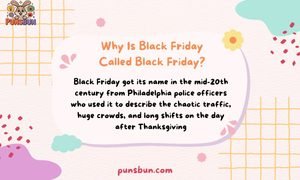
One of the best-known historical explanations connects the shopping term to Philadelphia.
During the mid-20th century, large crowds of holiday shoppers and visitors created difficult conditions for police officers and city workers.
Busy sidewalks, traffic congestion, and the crowds associated with the Army–Navy football game contributed to the atmosphere.
Police used the phrase “Black Friday” to describe the difficult day following Thanksgiving.
Over time, the expression became more widely recognized and eventually developed a positive association with retail sales.
Philadelphia and the Early Shopping Crowds
Philadelphia played an important role in the history of the modern Black Friday shopping tradition.
As holiday shoppers traveled into the city, streets became crowded and traffic conditions grew difficult.
Police officers sometimes worked extended shifts to manage the congestion.
The influx of visitors was also associated with the annual Army–Navy football game, which historically brought additional crowds to the area.
For the officers managing the situation, the Friday after Thanksgiving was not necessarily an enjoyable occasion.
The nickname reflected frustration with the heavy traffic and crowded conditions.
Eventually, the expression entered broader public usage.
How Black Friday Became a Positive Shopping Term
Retailers were naturally interested in presenting the shopping season in a positive way.
Over time, the unpleasant associations of Black Friday became less prominent, while the phrase increasingly came to represent special promotions and holiday shopping excitement.
By the 1980s, the term was becoming familiar across more of the United States.
Retail advertising helped transform the expression into a recognizable shopping event.
Today, many consumers associate Black Friday primarily with discounted merchandise rather than traffic problems or overworked police officers.
What About the Red Ink and Black Ink Explanation?
You may have heard that Black Friday received its name because businesses move from financial losses into profitability.
In traditional accounting language, being “in the red” means operating at a loss, while being “in the black” means making a profit.
Although retailers later promoted this explanation, it is not the best-supported historical origin of the post-Thanksgiving shopping name.
The earlier association with crowding and traffic in Philadelphia is better documented.
To explore that history in greater detail, read our related guide, “Why Is Black Friday Called Black Friday?”
What Happens on Black Friday?
Black Friday can look different depending on where you live, which stores you visit, and how you prefer to shop.
Some people plan their shopping days carefully. Others browse casually or avoid the event altogether.
Here are several common Black Friday activities.
1. Stores Advertise Special Discounts
Retailers promote price reductions on selected merchandise.
Popular categories often include televisions, laptops, headphones, kitchen appliances, clothing, and toys.
The discounts can vary significantly.
A retailer may offer a small reduction on one product and a larger discount on another.
That’s why comparing final prices is usually more helpful than relying on promotional percentages alone.
2. Shoppers Visit Physical Stores
Traditional Black Friday shopping is associated with busy retail stores, promotional displays, and customers looking for bargains.
Some stores open earlier than usual, while others follow their normal schedules.
In-store promotions may have limited quantities or special conditions.
If you plan to shop in person, check the retailer’s official hours and promotional rules before visiting.
3. Online Shopping Becomes Popular
Black Friday is no longer limited to physical stores.
Many shoppers now browse promotional offers from their smartphones, tablets, and computers.
Online shopping makes it possible to compare products without traveling between stores.
It can also help people avoid crowded shopping centers.
However, online shoppers should still pay attention to shipping costs, return policies, and suspicious websites.
4. People Purchase Holiday Gifts
Black Friday arrives just weeks before Christmas.
Many people use the event to buy gifts for children, parents, partners, friends, and other loved ones.
Toys, games, electronics, fashion accessories, and home products are common gift categories.
Some shoppers prepare their Christmas lists in advance to make decisions easier.
Others use Black Friday promotions to purchase gifts they had already planned to buy.
5. Retailers Promote Limited-Time Offers
Some promotions advertise a fixed time period, limited stock, or exclusive access.
These offers can create excitement, but they can also encourage rushed decisions.
Before purchasing, consider whether the product is actually useful and whether the price fits your budget.
It’s perfectly reasonable to skip a deal that doesn’t meet your needs.
What Are Black Friday Deals?
A Black Friday deal is a promotional offer advertised during the Black Friday shopping period.
A deal may involve a reduced price, a product bundle, a special coupon, or another purchasing incentive.
Different retailers use different promotional formats.
Understanding these formats can help shoppers interpret advertisements more confidently.
Percentage Discounts
A percentage discount reduces a product’s price by a specified amount.
For example, a $100 item advertised at 20% off costs $80 before taxes and other applicable charges.
Percentage discounts are easy to recognize because retailers often advertise them using phrases such as “20% off” or “Save 40%.”
But the important figure is the actual price you pay.
Dollar-Amount Discounts
Some retailers advertise a fixed amount of savings.
For example, a promotion might offer $50 off a particular kitchen appliance.
These offers can be straightforward to compare, especially when you already know the product’s usual selling price.
Buy-One-Get-One Promotions
Buy-one-get-one offers are often shortened to BOGO.
A store may offer a second product for free or at a reduced price when a customer buys the first.
Such promotions can be useful when you need multiple items.
However, buying extra products solely to qualify for a promotion may lead to unnecessary spending.
Product Bundles
Retailers sometimes sell multiple items together as a package.
A gaming console might be bundled with a controller or game.
A beauty retailer might offer several skincare products as a holiday gift set.
Compare the bundle’s price with the cost of the individual products to determine its value.
Doorbuster Deals
The term “doorbuster” refers to a particularly attention-grabbing promotional offer.
Historically, the term was associated with deals that attracted large numbers of customers to stores.
Modern retailers also use the phrase in online advertising.
Doorbuster offers may have quantity limits or other restrictions, so shoppers should read the promotional details carefully.
What Is the Difference Between Black Friday and Cyber Monday?
Black Friday and Cyber Monday are closely connected shopping events, but they developed with slightly different identities.
Black Friday traditionally emphasized in-store shopping.
Cyber Monday became associated with online promotions.
Today, however, both events often include digital shopping opportunities.
| Feature | Black Friday | Cyber Monday |
|---|---|---|
| Timing | Friday after Thanksgiving | Monday after Thanksgiving |
| Traditional focus | Physical retail stores | Online shopping |
| Modern shopping | In-store and online | Primarily online |
| Common promotions | Electronics, clothing, gifts, appliances | Technology, fashion, digital and other retail offers |
| 2026 date | November 27 | November 30 |
The distinction isn’t as strict as it once was.
Many retailers now run online Black Friday promotions and extend their deals through Cyber Monday.
For shoppers, the better event depends on the specific product and its actual price.
Is Cyber Monday Better Than Black Friday?
Neither event is automatically better.
A laptop might have a stronger offer on Black Friday, while a different product could be cheaper on Cyber Monday.
Availability, shipping costs, warranty coverage, and the retailer’s policies also matter.
A practical strategy is to compare the products you want across both events rather than assuming one always offers superior savings.
Is Black Friday a Holiday?
Black Friday is not a U.S. federal holiday.
It is a major retail event that takes place immediately after Thanksgiving.
Some employers, schools, and government offices observe the Friday after Thanksgiving as a day off, but that does not make Black Friday itself a nationwide federal holiday.
This distinction is important when planning appointments, deliveries, banking activities, or shopping trips.
Businesses may follow different schedules.
Do People Work on Black Friday?
Yes, many people work on Black Friday.
Retail employees, transportation workers, healthcare professionals, restaurant staff, and numerous other workers may have regular or adjusted schedules.
Some office employees take the day off or receive an extended Thanksgiving break.
Work arrangements vary by employer and industry.
Are Stores Open on Black Friday?
Many retailers operate on Black Friday and use the occasion to promote holiday sales.
However, opening hours vary widely.
A store may open earlier, maintain regular hours, or use a special holiday schedule.
Check the official website or contact the specific location before visiting.
Is Black Friday Only Celebrated in America?
Black Friday originated as a U.S. shopping tradition, but it has spread internationally.
Retailers in several countries now advertise Black Friday promotions.
The event is recognizable in places where Thanksgiving isn’t traditionally celebrated as a national holiday.
For these international markets, Black Friday is primarily a retail marketing occasion rather than part of a local Thanksgiving tradition.
Online shopping and international retail brands have helped popularize the phrase around the world.
Why Do Other Countries Have Black Friday Sales?
Businesses often adopt successful promotional events that customers already recognize.
Black Friday offers an established seasonal shopping theme.
International retailers can use it to advertise special prices, attract attention, and encourage purchases before the end of the year.
The precise format varies between countries and businesses.
Some stores advertise one-day sales, while others organize weeklong campaigns.
How to Prepare for Black Friday Shopping
A successful Black Friday shopping experience doesn’t require an enormous budget or a complicated plan.
A few practical steps can help you make better purchasing decisions.
Step 1: Create a Shopping List
Begin by writing down the products you actually need.
You might include a winter jacket, a replacement laptop, a coffee maker, or gifts for family members.
Try separating essential purchases from optional items.
A clear list helps you focus on useful promotions rather than every advertisement you encounter.
Step 2: Set a Spending Budget
Determine how much money you can comfortably spend.
If you’re shopping for several people, consider assigning a separate amount to each gift.
For example, a $300 holiday gift budget might cover multiple smaller presents rather than one expensive purchase.
Remember to account for sales taxes and shipping charges where applicable.
Avoid treating promotional prices as a reason to spend beyond your budget.
Step 3: Compare Prices Before the Sale
A product advertised at 50% off isn’t necessarily the best deal available.
Retailers may use different reference prices, and some items regularly sell below their suggested retail price.
Checking prices before Black Friday can give you a clearer understanding of what represents genuine savings.
Focus on identical product models, sizes, specifications, and warranty terms.
Step 4: Read Product Reviews
A bargain isn’t valuable if the product doesn’t meet your expectations.
Before buying, review the product’s features, limitations, and customer feedback.
For electronics, check technical specifications and model numbers.
For clothing, review the size chart, fabric description, and return conditions.
For household appliances, consider durability, available space, and ongoing maintenance costs.
Step 5: Understand Return Policies
Some Black Friday products may be subject to special return rules.
A retailer might offer different return deadlines for seasonal purchases or certain categories.
Check whether the item is returnable, whether restocking fees apply, and how refunds are issued.
Keep receipts and order confirmations until you’re satisfied with your purchase.
Step 6: Shop Through Trusted Websites
Online Black Friday promotions can attract scammers who imitate legitimate retailers.
Before entering payment information, examine the website address carefully.
Avoid suspicious links, unexpected messages, and offers that seem too good to be true.
Use secure payment methods with appropriate consumer protections.
When possible, visit the retailer’s official website directly rather than following unfamiliar advertisements.
Step 7: Don’t Rush Every Decision
Promotional countdowns can make shoppers feel they must purchase immediately.
Sometimes an offer really is limited.
But urgency alone isn’t a good reason to buy something.
Ask yourself whether you would still want the product without the advertisement.
If the answer is no, skipping the promotion may be the smartest decision.
Common Black Friday Shopping Terms and Their Meanings
Black Friday advertisements use several expressions that can confuse first-time shoppers.
Understanding these terms makes it easier to interpret sales announcements.
Black Friday Sale
A Black Friday sale is a promotion connected to the seasonal shopping event.
It may include discounted prices, coupons, special bundles, or other offers.
Early Black Friday Deals
These are promotional offers advertised before the official Black Friday date.
The phrase doesn’t guarantee that the early price is better than the price offered later.
Doorbuster
A doorbuster is a highly advertised deal intended to attract customer attention.
It may have limited availability.
Flash Sale
A flash sale is a promotion available for a relatively short time.
Retailers may advertise the exact hours or ending time.
Limited Stock
Limited stock means only a certain number of units are available.
Customers should confirm the quantity restrictions and availability conditions before making purchasing plans.
Price Match
Price matching refers to a retailer’s willingness, under specified conditions, to match a competitor’s price.
Not all stores offer price matching, and some exclude major promotional periods.
Final Sale
A final-sale item generally has restricted return or exchange options.
Check the retailer’s policy carefully before purchasing.
Promo Code
A promo code is a combination of letters or numbers entered during checkout to receive an eligible promotion.
Black Friday Weekend
This expression refers to the shopping period around the Friday after Thanksgiving, often including Saturday and Sunday.
Cyber Week
Cyber Week generally refers to a longer promotional period surrounding Cyber Monday.
The exact definition varies among retailers.
Black Friday Myths and Misunderstandings
Because Black Friday is so popular, several misunderstandings have developed around it.
Myth 1: Every Product Is Cheaper on Black Friday
Not necessarily.
Some products have excellent seasonal offers, while others may sell for similar or lower prices at different times.
Compare actual selling prices before assuming a promotion is exceptional.
Myth 2: Black Friday Is Always the Best Time to Buy Electronics
Electronics are commonly advertised during Black Friday, but the best purchase timing depends on the specific product.
A model might become cheaper when a newer version launches or during another seasonal promotion.
Myth 3: Black Friday Means Stores Must Make a Profit
The day has no universal rule requiring retailers to become profitable.
Profitability depends on a business’s overall costs, revenue, margins, and other financial factors.
The popular “red ink to black ink” explanation is also not the original documented source of the shopping name.
Myth 4: Black Friday Only Happens in Physical Stores
Black Friday now includes extensive online shopping.
Many retailers advertise deals through their websites and mobile apps.
Myth 5: You Must Buy Something to Participate
Shopping is optional.
Some people enjoy researching products or browsing seasonal displays without purchasing anything.
Others choose to avoid Black Friday altogether.
You don’t need to spend money simply because an event is widely advertised.
Fun Black Friday Facts and Cultural Traditions
Black Friday has developed a distinctive place in American popular culture.
People joke about crowded stores, early shopping trips, overflowing carts, and the excitement of finding a bargain.
The event also provides inspiration for online memes, social media captions, and shopping-related humor.
Some friends turn Black Friday shopping into an annual tradition.
Others prepare coffee, compare wish lists, and browse promotions together.
Families may coordinate gift purchases or plan which stores to visit.
Of course, not everyone enjoys shopping crowds.
Some people prefer spending the day relaxing, watching movies, traveling, or continuing their Thanksgiving weekend.
Popular Black Friday Expressions
You might hear shoppers say:
- “Deal me in!”
- “I’m on a bargain hunt.”
- “That’s a steal!”
- “Time to shop till I drop.”
- “My cart is ready.”
- “The deals are calling.”
These expressions add a playful element to shopping conversations.
For example, “That’s a steal” means a product is available at an unusually attractive price. It doesn’t suggest that someone is actually stealing anything.
Why Black Friday Inspires So Many Jokes
Black Friday combines several situations that make good comedy: enthusiastic shoppers, advertisements promising huge savings, and the familiar temptation to buy more than planned.
A playful joke might be:
“Why did the shopper bring a calculator to Black Friday? To make sure the savings actually added up!”
Another lighthearted line is:
“My Black Friday shopping list is organized. My self-control is still under review.”
These jokes work because they exaggerate recognizable shopping experiences without needing complicated explanations.
Frequently Asked Questions About Black Friday
What is Black Friday in the USA?
Black Friday is the Friday after Thanksgiving in the United States. It is widely associated with special retail promotions and the start of the Christmas shopping season.
What is the real meaning of Black Friday?
In modern everyday language, Black Friday refers to a major shopping event. Historically, the post-Thanksgiving nickname is strongly connected to crowded streets and difficult traffic conditions in Philadelphia.
Why is it called Black Friday?
The modern shopping name is commonly traced to Philadelphia, where police used the expression to describe the difficult conditions created by large crowds and traffic after Thanksgiving.
The later explanation about businesses moving from red ink to black ink became popular afterward.
What day is Black Friday in 2026?
Black Friday falls on Friday, November 27, 2026.
Is Black Friday before or after Thanksgiving?
Black Friday always takes place after Thanksgiving. It is the following day.
Is Black Friday a federal holiday?
No. Black Friday is not a federal holiday in the United States, although some workers have the day off as part of the Thanksgiving weekend.
Are Black Friday deals only available on Friday?
No. Many stores offer early promotions and extended Black Friday sales. Specific dates and availability depend on each retailer.
What is the difference between Black Friday and Cyber Monday?
Black Friday traditionally focused on in-store shopping, while Cyber Monday became known for online promotions. Today, both events often feature online discounts.
Does Black Friday happen every year?
Yes. Black Friday occurs every year on the Friday after American Thanksgiving.
Is Black Friday the same as Christmas?
No. Black Friday is a retail shopping event in November. Christmas is celebrated on December 25 and has religious, cultural, and family significance.
Can you shop Black Friday online?
Yes. Many retailers offer Black Friday promotions through their websites and mobile applications.
Is everything really 50% off on Black Friday?
No. Discounts vary by retailer and product. Some items may have substantial reductions, while others receive smaller promotions or no discount.
Should I wait until Black Friday to buy something?
That depends on the product, your budget, and the available price. Comparing prices over time can help you make an informed decision.
Why do people wake up early on Black Friday?
Traditionally, some shoppers arrived early to access limited promotions or popular products. Online shopping and longer sale periods have changed this behavior.
Why is Black Friday so popular?
Black Friday combines holiday shopping traditions, major retail advertising, gift buying, and the excitement of finding promotional prices.
Is Black Friday celebrated around the world?
Black Friday promotions now appear in many countries, although the event originated as an American shopping tradition connected to the day after Thanksgiving.
Final Thoughts: Understanding Black Friday
Black Friday is one of America’s most recognizable shopping traditions.
It takes place every year on the Friday after Thanksgiving and is widely known for promotional offers, holiday gift shopping, and seasonal retail excitement.
What began as an expression associated with a difficult day for Philadelphia police eventually developed into a major shopping event.
Today, Black Friday includes physical stores, online retailers, early promotions, weekend sales, and countless shopping-related expressions.
For consumers, the key to enjoying Black Friday is understanding that a promotional price isn’t automatically a good purchase.
Planning ahead, comparing prices, and choosing products carefully can make the experience more rewarding.
Whether you love searching for bargains or simply want to understand an important American tradition, Black Friday offers an interesting glimpse into the relationship between language, history, shopping, and holiday culture.
Black Friday 2026 is Friday, November 27. And now that you know what Black Friday means, you’ll be ready to recognize the event, understand its traditions, and decide how you want to spend the day.

Welcome to punsbun.com! I’m the creative mind behind this fun-filled website. With over 3 years of experience in crafting puns, jokes, and witty one-liners, I’ve honed my ability to turn everyday moments into laughter.