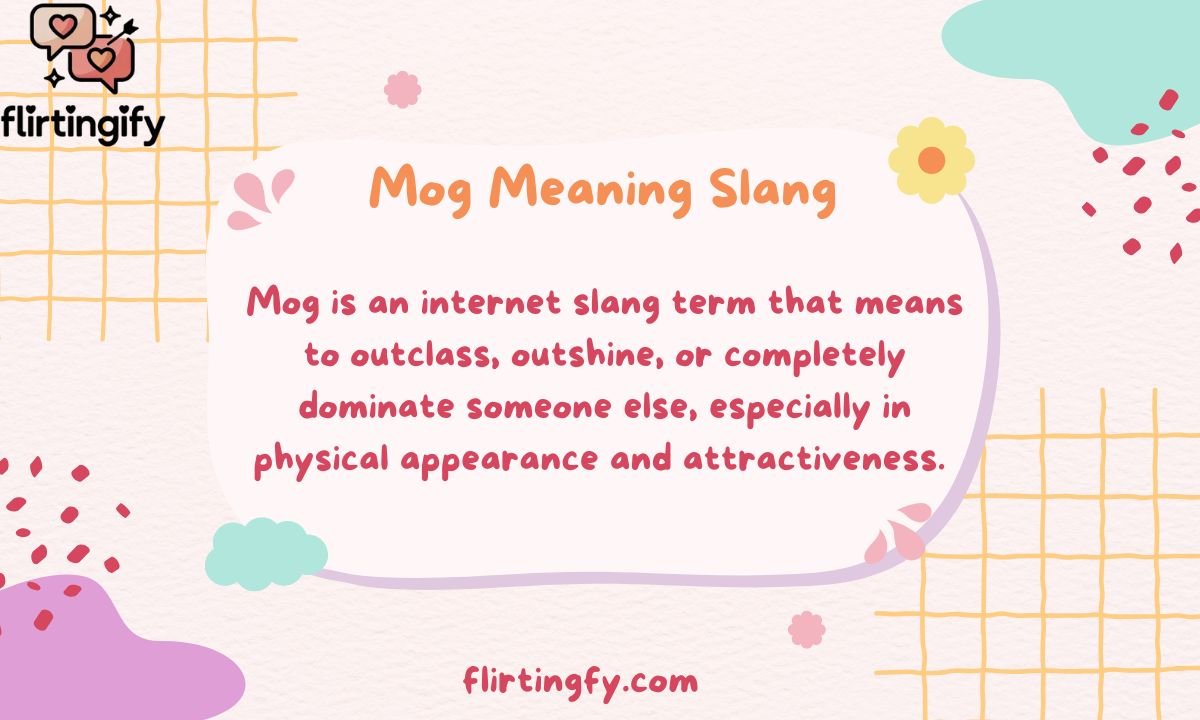
So you saw someone comment “he mogs so hard” and had no clue what it meant. Don’t worry, you’re not alone. “Mog” is one of those small words that spread fast across TikTok, gaming chats, and group texts, and it can feel confusing if nobody explains it to you properly.
This guide breaks down the mog meaning in plain, simple words. You’ll learn where it came from, how Gen Z uses it today, and how to use it yourself without sounding forced or out of touch.
What Does Mogging Mean in Slang?
In simple terms, “mogging” means outshining someone else. It usually happens without trying hard.
When someone says “he’s mogging,” they mean that person looks better, stands taller, or simply has more presence than the people around him. It is mostly used about looks, but people now use it for skill, confidence, and even vibe.
Here is a quick breakdown:
- Mog (verb): to outshine or dominate someone, usually in looks
- Mogged (past tense): got outshined by someone else
- Mogging (present tense): actively outshining someone right now
- Mogger: the person who does the mogging
A simple way to remember it: if someone walks into a room and everyone notices them first, they are mogging everyone else there.
Generational Slang Comparison
Slang changes fast, and “mog” means something slightly different depending on who you ask. Here’s how different age groups tend to understand and use it.
| Generation | How They Use “Mog” | Common Context |
|---|---|---|
| Gen Alpha (born 2010s+) | Casual, playful, used daily | TikTok, gaming, school chats |
| Gen Z (born late 90s-2012) | Common slang, used confidently | Social media, group chats, memes |
| Millennials | Still learning it, use it jokingly | Reacting to younger trends |
| Gen X and older | Mostly unfamiliar or confused | Rarely used, often need explanation |
This table shows why the word feels brand new to some people and completely normal to others. It really depends on how close you are to online youth culture.
Mog Meaning Slang Urban Dictionary
Urban Dictionary was one of the first places that tried to explain “mog” to a wider audience. Entries there generally describe mogging as one person being so much more attractive, confident, or dominant that the other person fades into the background by comparison.
Most Urban Dictionary definitions agree on a few things:
- Mogging is usually about appearance first
- It can also apply to personality, status, or skill
- It is almost always used to compare two people directly
Keep in mind that Urban Dictionary entries are written by random users, so definitions can vary a lot. The core idea, though, stays consistent across most entries: one person simply outclasses another.
Mog Off Meaning Slang
“Mog off” sounds aggressive, but it actually has two very different uses depending on where you hear it.
- Older British slang meaning: “mog off” means to leave or go away, similar to saying “get lost” or “head out.”
- Newer internet slang meaning: some people use “mog off” to tell someone to stop showing off or stop flexing their looks.
Context matters a lot here. If a British grandparent says “mog off,” they probably mean “go away.” If a teenager says it online, they might be joking about someone acting too confident.
Mog Meaning TikTok
TikTok is where “mog” really took off and became part of everyday online language. Short videos comparing jawlines, height, or outfits helped push the word into the mainstream.
On TikTok, mog usually shows up in:
- Comment sections under glow-up videos
- Comparison edits between two people
- Captions joking about someone’s appearance
- Duets reacting to attractive people
A typical TikTok comment might say, “bro is mogging everyone in this video.” That simply means the person stands out as the most attractive or impressive one on screen.
Mog Meaning in Chat
In texting and group chats, “mog” is used quickly and casually. People don’t overthink it, they just drop it into normal conversation.
Examples of how it shows up in chats:
- “ngl you were mogging at the party last night”
- “bro got mogged by his little brother 💀”
- “stop mogging everyone, it’s not fair”
It fits naturally into casual texting because it’s short, punchy, and easy to type. You’ll often see it paired with emojis like 💀 or 🔥 to add humor or emphasis. And hey, if you’re also looking for sweet words to text someone special, this list of 6-month anniversary quotes is a good one to bookmark too.
Mog Meaning Slang Reddit
Reddit threads have helped shape and debate the meaning of “mog” over time. On forums focused on fitness, self-improvement, and internet culture, users discuss the term constantly.
Common Reddit opinions about mogging include:
- Some users see it as harmless fun between friends
- Others criticize it for encouraging unhealthy comparison
- Many threads break down specific types, like “face mogging” or “height mogging”
- Fitness and self-improvement forums often discuss it seriously
Reddit tends to go deeper into the term than TikTok does, with long comment threads debating whether the word is toxic or just a joke.
Mog Battle Meaning Slang
A “mog battle” is exactly what it sounds like: two people being compared side by side to see who outshines the other. It’s usually playful, not mean-spirited.
Mog battles often happen through:
- Side-by-side photo comparisons
- Friends joking about who looks better that day
- Online polls asking “who mogs harder?”
- Meme pages posting comparison images
Nobody really “wins” a mog battle in a serious way. It’s mostly for laughs between friends or a fun way to react to photos online.
Mog Meaning Slang Gen Z
For Gen Z, “mog” isn’t just slang, it’s part of everyday humor. It fits into their larger vocabulary of appearance-based slang words like “glow up,” “rizz,” and “aura.”
Gen Z tends to use mog in these ways:
- As a compliment (“he’s mogging today”)
- As a joke among friends (“you got mogged lol”)
- As a reaction to celebrities or influencers
- As part of meme captions and reaction videos
It reflects how Gen Z communicates: quick, visual, and often tied to comparison culture shaped by social media.
Mog Meaning Slang Sentence
Seeing the word in context makes it much easier to understand. Here are some simple example sentences:
- “He walked in wearing that jacket and completely mogged everyone.”
- “I got mogged by my own cousin at the family photo.”
- “She’s not even trying and she’s still mogging the whole room.”
- “Stop comparing yourself, you don’t need to mog anyone.”
- “That’s a mog moment right there.”
Notice how the word can be a compliment, a joke, or even friendly teasing, depending on tone.
Mog Meaning Slang Origin
The word “mog” is believed to come from “AMOG,” which stands for “Alpha Male of the Group.” This term started in online forums focused on social dynamics and dating advice, where it described the most dominant or attractive man in a group setting.
Over time, people shortened “AMOG” to “mog” and turned it into a verb. Instead of just describing a person, it became an action: to mog someone means to outshine them the way an “alpha” would in that original context.
The word later spread from niche forums into gym culture, gaming communities, and eventually mainstream platforms like TikTok and Instagram. By 2025, it had become common enough that major dictionaries added it as internet slang.
Mog #face Meaning
“Face mog” or “#mog” tags usually refer to facial comparisons specifically. People use this to talk about jawlines, cheekbones, eyes, or overall facial structure.
You’ll often see hashtags like #facemog or #mogface attached to:
- Before and after photos
- Side-by-side facial comparisons
- Videos discussing facial features
- Content related to grooming or skincare glow-ups
This niche use grew alongside “looksmaxxing” content, where people focus heavily on improving their facial appearance through skincare, grooming, or lifestyle changes.
How to Use Slang Naturally Without Sounding Awkward
Using slang the right way takes a little practice. Here are simple tips to help it sound natural instead of forced.
- Match the tone of the conversation. Use mog in casual chats, not formal writing.
- Don’t overuse it. Dropping it into every sentence makes it feel try-hard.
- Watch how others use it first. Pay attention before jumping in yourself.
- Keep it light. Most of the time, it’s meant to be playful, not mean.
- Use it with people who already understand it. Context matters a lot.
Slang works best when it flows naturally, not when it’s forced into a sentence just to sound trendy.
Common Slang Mistakes
Even simple slang words get misused sometimes. Here are mistakes people often make with “mog.”
- Using it too seriously: It’s usually meant as a joke, not a harsh insult.
- Overusing it in every sentence: This makes it feel unnatural fast.
- Mixing it up with “mob”: These are two completely different words.
- Using it in formal settings: Save it for casual chats, not emails or schoolwork.
- Forgetting tone matters: The same sentence can sound friendly or rude depending on how it’s said.
Avoiding these small mistakes will help you use the word more confidently.
Practice Section
Try filling in the blanks below to test what you’ve learned.
- “Bro, you totally ______ everyone at the party last night.” (mogged)
- “Stop ______ me, it’s not a competition.” (mogging)
- “That’s definitely a ______ moment right there.” (mog)
- “He has serious ______ energy today.” (mogging)
- “Who do you think ______ harder in that photo?” (mogs)
Check your answers against the words in parentheses. If most of them matched, you’re ready to use “mog” confidently in real conversations.
Frequently Asked Questions
What does mog mean in slang?
Mog means to outshine or outclass someone, usually in looks, but sometimes in skill or confidence too.
Is mog a positive or negative word?
It depends on tone. It’s usually playful, but it can sound harsh if used seriously or repeatedly.
Where did the word mog come from?
It comes from “AMOG,” short for “Alpha Male of the Group,” later shortened into the verb “mog.”
Is mogging only about looks?
Mostly, yes, but people also use it for personality, style, gaming skill, or overall presence.
What does it mean to get mogged?
Getting mogged means someone else outshined you in a comparison, usually in a light, joking way.
Is mog used only by Gen Z?
Gen Z uses it the most, but Gen Alpha has picked it up too, and older generations are slowly learning it.
Can mog be used in a sentence casually?
Yes, it fits naturally into texts and casual talk, like “he’s mogging today” or “I got mogged, lol.”
Conclusion
Slang like “mog” shows how fast language moves today. What starts in small online spaces can end up in everyday chats within just a year or two. Now that you know where it came from and how people actually use it, you won’t feel lost the next time it shows up on your screen.
Try using it casually with friends who already know the word, and watch how naturally it fits into daily conversation. Slang works best when it feels relaxed, not forced, so take your time and let it grow on you. For a deeper, dictionary-backed look at the word’s history and usage, you can check Merriam-Webster’s entry on “mog”.

Welcome to punsbun.com! I’m the creative mind behind this fun-filled website. With over 3 years of experience in crafting puns, jokes, and witty one-liners, I’ve honed my ability to turn everyday moments into laughter.






1 thought on “Mog Meaning Slang Explained: The Ultimate 2026-27 Guide to Using “Mog” Like a Pro”